
Get Paid to Produce
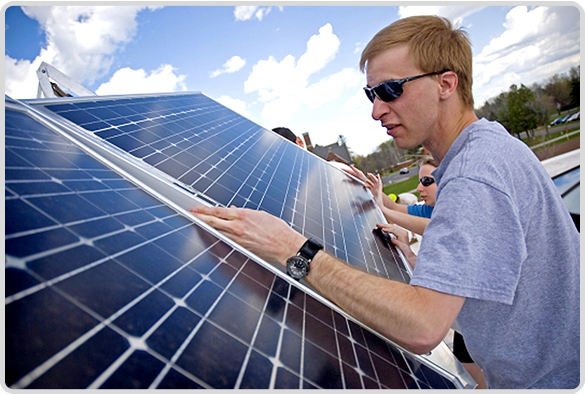
 Feed-In Tariff (FIT)The Feed-In Tariff, also known as FIT, became available in the UK on April 1st 2010.
view details
Feed-In Tariff (FIT)The Feed-In Tariff, also known as FIT, became available in the UK on April 1st 2010.
view details
 How Much Money? The amount of money you receive depends on the type and size of the system you use...
view details
How Much Money? The amount of money you receive depends on the type and size of the system you use...
view details  Limitations Anyone who installs a renewable electricity system with a capacity of five megawatts or less...view details
 Renewable Energy To register for the Renewable Heat Incentive you will have to provide proof of installation...view details
Feed-In Tariff (FIT)
The Feed-In Tariff, also known as FIT, became available in the UK on April 1 2010 and is the electricity sector of the Clean Energy Cash Back scheme – a Government-backed scheme that pays people who create their own electricity using green technology including solar PV panels.The Feed-In Tariff guarantees a minimum payment for all electricity generated by the system, as well as an additional payment for the unused electricity produced that can be exported to the grid, known as the Generation tariff and Export tariff respectively.
These payments will boost household savings as bills will be reduced by using electricity generated on-site.
The tariff is available to everyone – households, landlords, businesses and even communities and organisations like schools and village halls – and will be overseen by Ofgem which regulates the electricity and gas markets in Great Britain.
How much money could I receive?
The amount of money you receive depends on the type and size of the system you use to generate the renewable energy. The good news is that the biggest payments come with solar PV panel technology with as much as 40.3p per Kilowatt hour available – click here to see the official tariff levels table for all renewable energy technology.As well as the payment you receive for generation, an extra 3p per Kilowatt hour of electricity produced that is exported to the grid will also be received, taking it to a total of 43.3p/kWh.
According to the Government, these tariffs should cover the initial cost of the installation of the technology with a return of up to eight per cent. With solar PV panels installed, that means you should earn back the capital costs of the installation two or three times over the duration of the tariff as well as making sufficiently reducing your bills.
Please see the Ofgen website for up-to-date tariff pricing.
What limitations are there
and am I eligible?
Anyone who installs a renewable electricity system with a capacity of five megawatts or less is eligible to receive the Feed-In Tariff. The five megawatt system can be used on a single property for a householder or business or used collectively by a community.
Solar PV isn't the only technology that qualifies for the tariff – wind turbines, hydroelectricity, anaerobic digestion and micro-combined heat and power systems (Micro-CHP) all qualify too – but it is expected to be the most popular renewable alternative in the UK.
The tariffs available and the process for receiving them varies depending on when the technology was installed and if you followed the guidelines of using an installer certified under the Micro generation Certificate Scheme (MCS*).
To qualify for the full Feed-In Tariff payments you must have either had the technology installed between 15July 2009 and 31 March 2010 and transferred to Feed-In Tariff before April 2010 or have the technology installed after 1 April 2010 using a certified product and installer.
* The Micro generation Certification Scheme (MCS) is an independent scheme that certificates micro generation products under 50kW and installers in accordance with consistent standards. Any commercial or larger scale systems, over 50kW, and all anaerobic digestion installations must apply directly through the Renewable's Obligation Order feed-in tariff process for larger installations (ROO-FIT) process as they are not covered by the MCS.
Renewable Heat Incentive
When can I claim the tariffs?You will not be able to claim the tariff until April 2011. However, any system that was installed after July 15th 2009 will be able to claim the Renewable Heat Incentive when it goes live.
How to register
To register for the Renewable Heat Incentive you will have to provide proof of installation to Ofgem so that you can be formally registered in the scheme. However, do NOT try doing this now as the scheme isn't live yet.
Once that has been done we are told that Ofgem will begin paying the incentive. This is likely to be in the form of an annual lump sum, probably credited to your bank account but final details won't be revealed until the consultation response is published.
Funding the RHI
The RHI powers in the Energy Act 2008 enable the introduction of a new levy on fossil fuel suppliers who supply fossil fuel to consumers for the purpose of generating heat.
Who can receive the RHI
Houses and buildings which currently use conventional fossil fuel for heating, such as gas, heating oil or coal, will be able to claim the RHI if they switch to renewable technologies. The RHI will be available to householders, local authorities and social landlords as well as the public, industrial and commercial sectors. The RHI is applicable to the whole of the UK except for Northern Ireland, which will have its own powers to enable a similar scheme.
We are proud accredited suppliers of: